
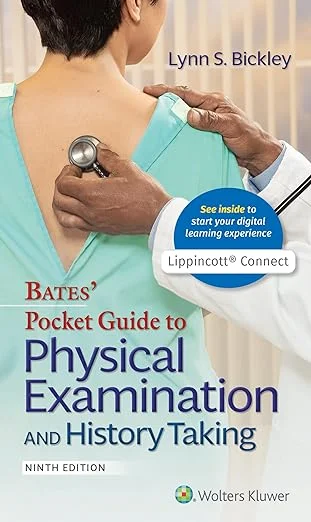

Bates’ Pocket Guide to Physical Examination and History Taking (Ninth Edition) remains the gold-standard quick-reference for medical, nursing, physician-assistant, and allied-health students and professionals. Compact yet comprehensive, this pocket-sized guide provides evidence-based, step-by-step instructions for conducting thorough patient interviews and physical examinations across all major body systems — from head-to-toe, including special life-stages like childhood, pregnancy, and older adulthood.
The 9th Edition enhances usability with a redesigned layout, new student-friendly learning aids, and updated clinical guidance. It retains the clear two-column format: examination techniques on the left, and potential abnormalities (with differential diagnoses) on the right — making it easy to follow, even during busy clinical rotations.
Key updates in this edition include:
Expanded Unit 1, offering an in-depth overview of the patient-encounter process, improving information gathering and decision-making workflows.
New algorithms to help guide assessment when patients present with common symptoms.
LWW Official Store
Restructured regional examination chapters — enhanced coverage of exam techniques, health promotion, and counselling considerations.
Updated photographs, illustrations, and clinical references aligned with the latest evidence-based standards.
Numbered text boxes for quick access to clinical condition summaries and useful tips for challenging exam maneuvers.
LWW Official Store
With 600 pages of richly illustrated content covering all organ systems, life-cycle stages, and clinical contexts, this edition is an indispensable resource for both learners and practitioners seeking a reliable “on-the-go” reference.
Why This Book is Essential
Concise yet comprehensive – Condenses essential physical-exam and history-taking knowledge into a portable format ideal for rounds, clinics, or study sessions.
Systematic coverage – From general survey and vital signs to detailed system-wise exam (skin, cardiovascular, nervous system, pregnancy, aging, etc.), including pediatrics, obstetrics, geriatrics, and more.
Clinically relevant and up to date – Aligns with current evidence, guidelines, and clinical reasoning approaches; includes updated screening recommendations, health promotion, and risk-factor counseling.
Student-friendly design – Easy-to-follow two-column layout, numbered summary boxes, algorithms, and clear illustrations make it suitable for rapid review and recall.
Lifelong reference tool – Whether you are new to patient assessment or an experienced clinician, this guide remains a go-to reference for history-taking and physical examination across all patient populations.





Reviews
There are no reviews yet.