
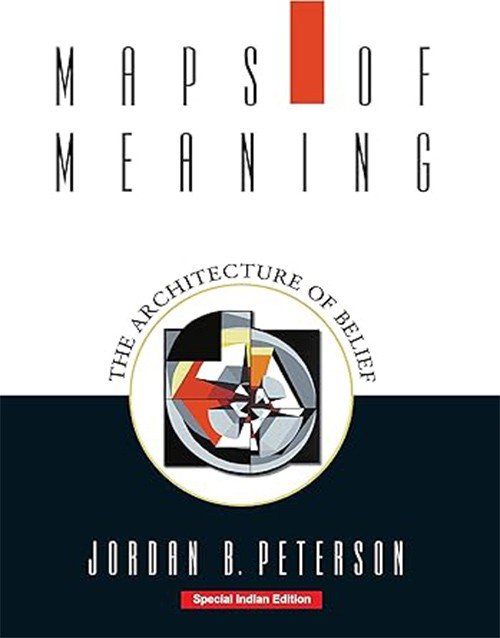

Maps of Meaning: The Architecture of Belief by Jordan B. Peterson is a profound and interdisciplinary exploration into how humans build meaning through belief systems. Blending psychology, mythology, philosophy, religion, and neuroscience, this acclaimed work offers deep insight into the mental maps that guide our values, actions, and cultural narratives.
Key Features
-
Interdisciplinary Framework — Integrates cognitive science, Jungian theory, mythology, and neuropsychology to illuminate storytelling and belief formation.
-
Order vs. Chaos Archetype — Presents a compelling model where myths symbolize the dynamic struggle between the known (order) and the unknown (chaos), charted through the hero’s transformative journey.
-
Myth as Meaning — Demonstrates how enduring myths across cultures operate as symbolic frameworks to convey morality, purpose, and emotional regulation.
-
Ambitious and Deeply Reflective — Dense yet rewarding, this book challenges and expands the reader’s perspective on ideology, morality, and human motivation.
Ideal For:
-
Philosophy & Psychology Enthusiasts — Individuals intrigued by human nature, narrative, and existential questions.
-
Peterson Followers — Readers eager to understand his foundational ideas and complex theoretical constructs.
-
Students & Scholars — As a reference for discussions on narrative psychology, myth, and belief systems.
What Makes It Stand Out:
A rare blend of scholarly depth and mythic storytelling, Maps of Meaning is celebrated for its bold synthesis and its capacity to provoke existential inquiry. Though not light reading, its intellectual rigor rewards those willing to engage deeply with its rich theoretical tapestry.












Reviews
There are no reviews yet.